The Theory
The Distance a Voice Can Travel
I am calling it the Myelination Theory of Collective Healing, and I am still building it. I am not presenting findings. I am a nurse who has been circling the same question for a long time and has finally found language that fits it.
One thing I want to be clear about. I am not saying an organization is a nervous system. It is not. I am saying the shape of the problem is the same, and that borrowing the shape has let me ask better questions than I could ask before.
The physiology it rests on
What carries a voice
There is a reason a nerve can carry a message the whole length of an arm and not wear itself out doing it.
The fiber does not manage that on its own. Something wraps it. Layer over layer, a kind of insulation called myelin — a fatty coating that other cells wind around the fiber the way you would wind tape around a wire. The myelin has nothing to say. It does not make the message and it does not carry it. All it does is protect the line. And that turns out to be everything, because a protected line lets a message move in leaps instead of inching along and tiring out. It jumps from one small bare spot to the next, and it arrives fast, and it arrives whole. There is a name for that leaping — saltatory conduction — and it is the difference between a wrapped fiber and a bare one (Purves and colleagues; Morell and Quarles).
Take the wrapping off and nothing about the message changes. The fiber is still there. The message is still there. It simply cannot get anywhere.
Nothing was wrong with what was said. Nothing was wrong with the person who said it. What went missing was the thing that let it travel.
Thomas Hübl and Otto Scharmer both describe this from the inside. Hübl says that when a group has carried more than it could take in, the sign is not drama — it is numbness, or absence. People go distant. The situation stops feeling like theirs, and they stop being able to feel each other. The group version he calls collective numbness (Thomas Hübl, Healing Collective Trauma, Sounds True, 2020). Scharmer has a word for the same turning away at the level of a whole system: absencing, the opposite of the presencing he is better known for (Otto Scharmer, Theory U: Leading from the Future as It Emerges, 2007).
Different doors, same room. That is what an unwrapped line feels like to the people living on it. They stay in the building and go absent to each other. Not silence, exactly. Absence.
This is the most useful thing I know about why good people in good organizations stop being heard.
We keep asking the fiber to try harder.
Where the name came from
What gets read
Our genes are not a script that runs the same way no matter what. Sitting on top of the code is a second layer, the epigenome, that decides which genes get read, when, and how loudly, and that layer answers to what is happening around us. The sequence itself does not change. What changes is what gets expressed (review of the epigenetics literature).
The mechanism is ordinary and physical. Small chemical tags are added to the DNA itself, or to the spool-like histone proteins the DNA winds around, and those tags act as switches. A methyl tag parked on a gene makes that stretch harder to read, so the gene goes quiet and its protein is not made; lift the tag off and the gene can be read again. Behavior and environment are among the things that add and remove them — which is how the same code comes to be expressed one way under one set of conditions and another way under another (Chukwuma, Journal of Medical Research, 2022).
Two things in that matter for the rest of this page. These marks are reversible, and they do nothing to the code itself — nothing is damaged, nothing is rewritten. What is altered is only what the code is able to do under the conditions it is being asked to live in. Hard early conditions leave marks on that layer, and there is growing evidence that some of those marks travel further than a single lifetime, though the human research is still young and I want to be careful with it (Genes, 2023).
I did not name this practice IntegratingDNA knowing any of that. I named it for what families pass down. It turns out the biology was already making my point.
We are not our code. We are our code plus the conditions it has been asked to live in.
Four states
How far a concern can travel here
Open the one that sounds like where you are. If more than one does, that is normal — most organizations hold different states in different units at the same time.

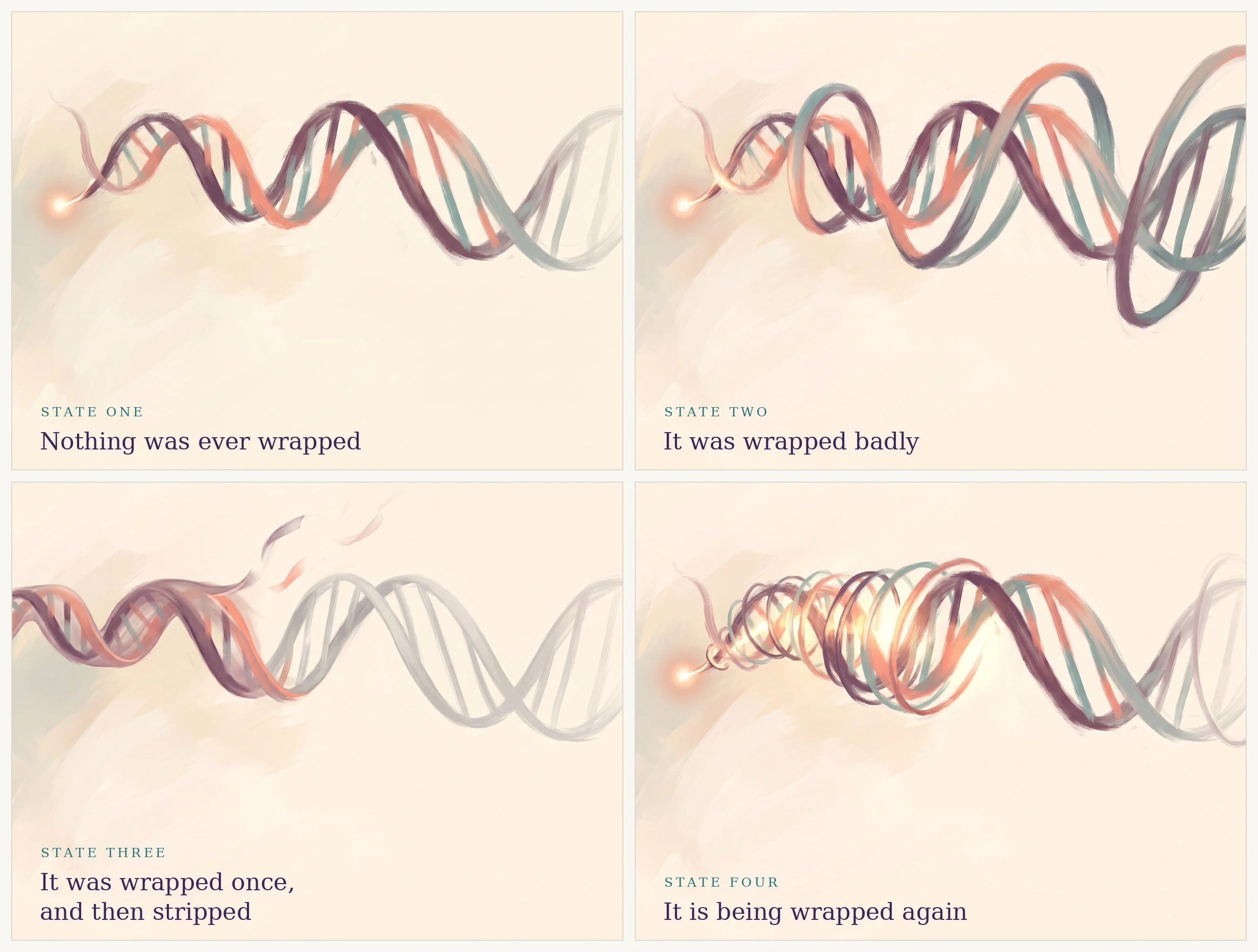
State One — Never wrapped
Nothing to wrap around
Nothing was ever wrapped. The vibration dies within the first inch.
Read more +
Some organizations are not broken. They were simply never built for this.
There is no forum where a concern reliably lands. No one whose job it is to receive it. No path from the bedside to the decision, and no expectation that such a path should exist. The quiet is not the quiet of damage. It is the quiet of absence.
This is the hardest state to name from inside, because there is nothing to point at. You cannot report the absence of a structure the way you can report a structure that malfunctioned. People in these settings often conclude that the problem is them — that they are not resilient enough, not political enough, not senior enough to be heard. They are none of those things. They are unsheathed.
What it can look like
- Concerns are raised individually, to whoever is nearby, and go no further
- There is no predictable answer to where does this go now
- Good ideas depend entirely on who happens to be in the room
- Staff describe their manager as supportive and still feel unheard
What this state needs first is not repair. It is construction.
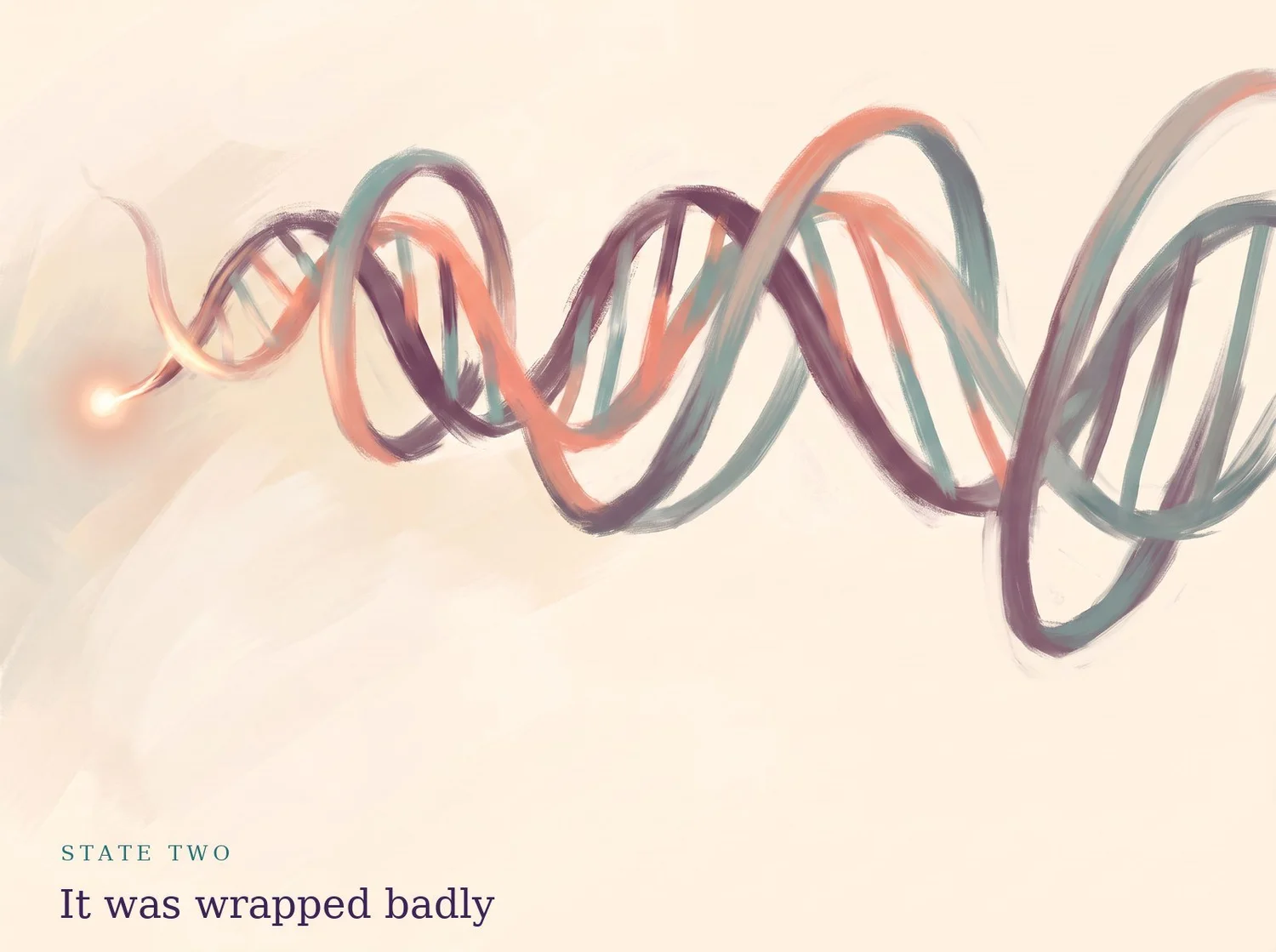
State Two — Wrapped wrong
Present, but not holding
Every coil is there and not one of them grips. The frequency dampens as it travels.
Read more +
This is the most common state I am called into, and the most demoralizing.
Here there is no shortage of structure. There are councils. There is a charter. There are council minutes, a staffing committee, an annual engagement survey, a just culture policy with a signature page. From the outside the organization looks well supported. Every layer that should be there is there.
And none of it is holding.
The council meets and cannot change the thing it was convened to change. The concern is documented and the documentation is where it stops. The survey is administered and the results are presented and the presentation is the intervention. Decision rights were never actually transferred, so the structure wraps loosely around the work without gripping it. The signal is not absent. It is smothered — spread sideways into process until it loses the force it started with.
This is the state that produces cynicism, and the cynicism is accurate. People are not resisting a good structure. They have correctly assessed a structure that cannot deliver, and they have stopped spending themselves on it.
What it can look like
- Councils exist and cannot name a decision they changed
- Escalation is available and rarely used by people who have used it before
- Improvement work is announced more often than it is finished
- The same concern appears in three consecutive years of survey data
What this state needs is not more structure. It is genuine decision rights inside the structure that already exists.
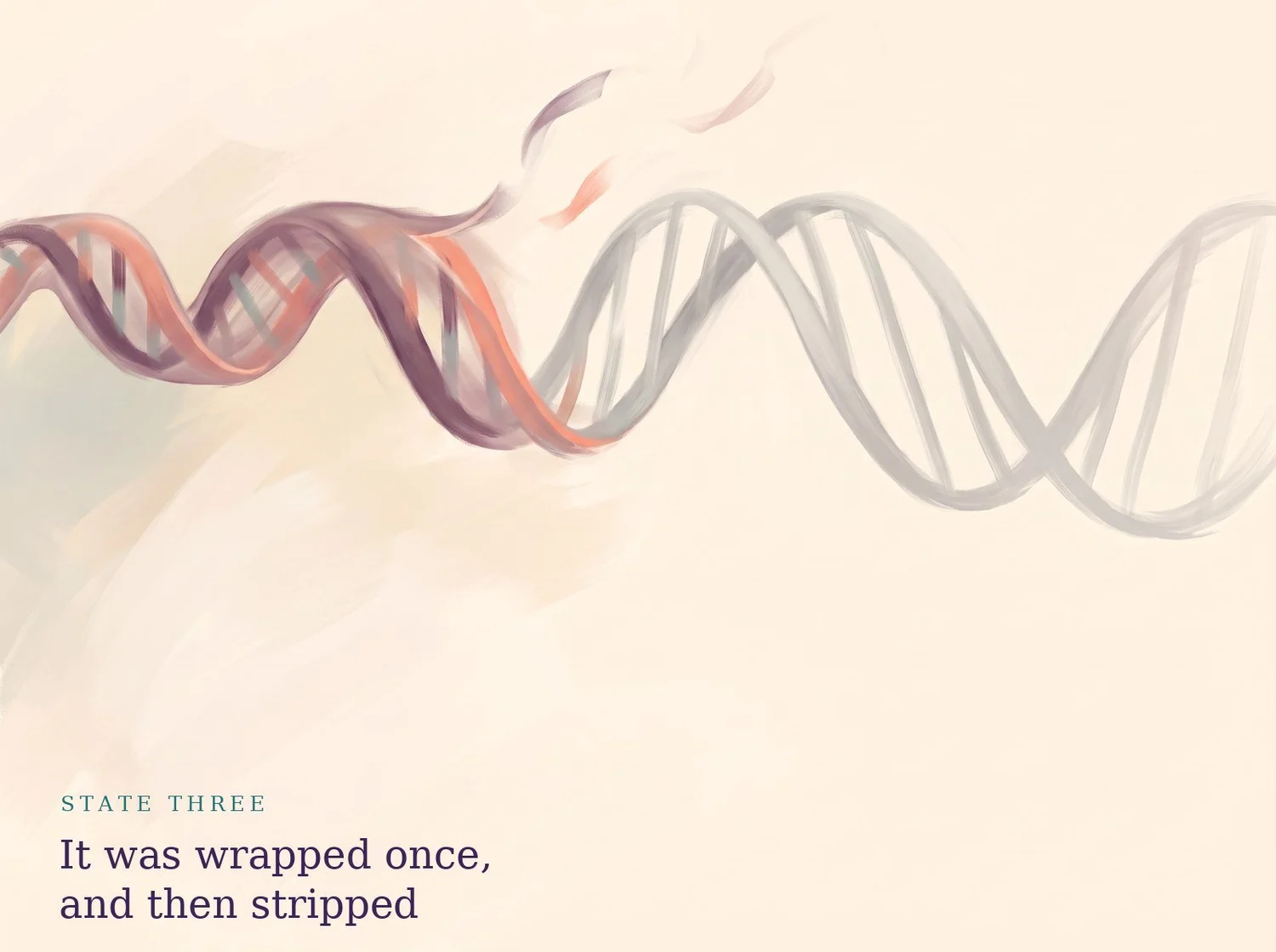
State Three — Stripped
It used to be here
It was wrapped once. The vibration stops exactly where the wrapping stopped.
Read more +
Sometimes the conditions were real. People remember them.
There was a manager who protected the huddle. There was a director who took things forward and came back with an answer. There was a stretch of two or three years when raising something actually led somewhere. Then that person left, or the service line was restructured, or a merger reorganized the reporting lines, or the census climbed and the meeting was the first thing cut. The layers came off.
What remains is a workforce with an accurate memory of better conditions and no current access to them. That combination is specific, and it is worse than never having had it. Grief and cynicism look similar from a distance and they are not the same thing, and they do not respond to the same intervention. People here are not disengaged. They are mourning something real while being asked to behave as though it never happened.
Loss also arrives from the other direction. Sometimes the support did not fail first — the person did. Someone is harmed, or exhausted past recovery, or made an error inside a system that set them up for it, and the relationships and standing that used to carry their voice fall away around them. The structure did not collapse. Their place in it did.
What it can look like
- Staff reference a previous era by name and date
- Experienced clinicians who used to speak up have gone quiet
- Turnover concentrated in the people who held things together informally
- Someone who was once central is now peripheral, and no one can say when that happened
What this state needs first is acknowledgment that something was lost. Rebuilding that skips this step does not hold.
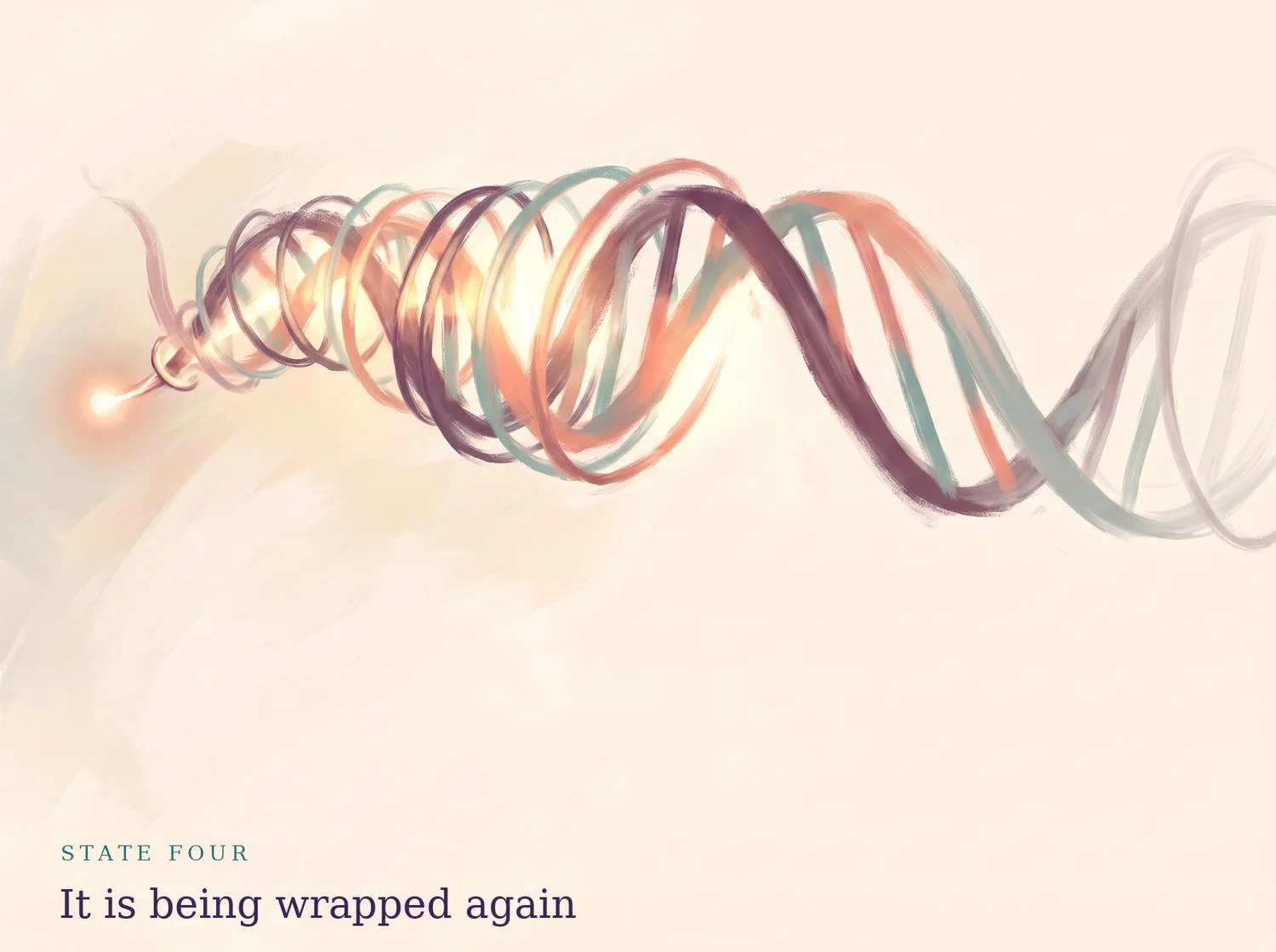
State Four — Rewrapping
It can be rebuilt, under conditions
Wrapped again, not as it was before and not yet finished. The vibration carries most of the way.
Read more +
Here is the part that keeps me in this work.
The cells that make the sheath do not die when it is stripped away. They persist. They revert to an earlier, more flexible state, they multiply, they reach back toward the fiber, they re-establish contact, and they wrap again. Repair is not a metaphor here. It is the documented default (Harry and Toews).
But it happens only when the conditions for it are present. Not willingness. Not intention. Conditions.
That is the honest version, and it is the version I would want told to me. Recovery in an organization is possible, it is more possible than most exhausted teams believe, and it is not available on demand. It requires that something be genuinely different — a decision actually moved, a boundary actually held, a promise actually kept where the last one was not. The new structure comes in lighter than the old one and slightly irregular. It is not a restoration. Some gaps stay open for a long time. It holds anyway.
What it can look like
- One concern goes through the full path and returns with a real answer
- A commitment made in a difficult month is kept in a harder one
- Someone who had gone quiet tests the water with something small
- People start saying we about a decision they did not make alone
What this state needs is patience and evidence, in that order, and repeatedly.
The part that surprised me
Where the frequency actually lives
It helps to be exact about what is moving. It is not light. It is a vibration — a frequency, carried as a wave of charge along the fiber, and it holds its shape only under the right conditions.
And the detail I did not expect to matter is this: the frequency does not travel through the insulation. It travels because of the insulation, but it lives in the gaps — the short, deliberately exposed places where it has to be regenerated or it goes no further.
Voice works the same way. It is not carried by policy. It is carried at the specific, exposed, non-optional points where something has to be said and received. A huddle where the hard thing is actually named. A council with a decision in front of it. A conversation a leader does not deflect.
Those points are where the work is. Everything else is what makes it possible to reach them.
Where this goes next
Naming the state changes what comes first
Recognizing the state you are in does not tell you what to buy. It tells you what the work has to address before anything else will hold. A system-level answer to a unit-level condition is a familiar way to spend a year without changing anything.
Every engagement begins the same way, whichever state you are in: a thirty-minute conversation, at no cost, with nothing to prepare. From Concern to Conditions is built for exactly this moment — you describe what you are noticing, we work with observable conditions rather than confidences, and you leave with a board that belongs to you whether or not we ever work together again.
We will work out which state you are actually in, and whether I am the right person for it.
Start with a conversationStill working this out in the open
This is a theory I am building, not a finished one. I write as it develops, and the thinking pieces collect in one place.
The four states describe organizational conditions. They are not a clinical assessment, a diagnosis of any individual, or a judgment of anyone’s intent. The underlying physiology is drawn from Harry GJ and Toews AD, Myelination, Dysmyelination, and Demyelination, Handbook of Developmental Neurotoxicology, and is used as a structural analogy rather than a claim about organizational biology.