The Threshold Between What Was and What Comes Next
A reflection on professional endings, mixed emotions, and taking the next honest step.
A recent professional transition has brought me to a threshold: the space between what was familiar and what is not yet fully formed.
I have been surprised by how many emotions can exist in the same moment. I have felt sad, because I cared deeply about the people and the organization involved. I have felt grief for the work, the relationships, and the possibilities that mattered to me. And I have also felt something I did not expect: relief.
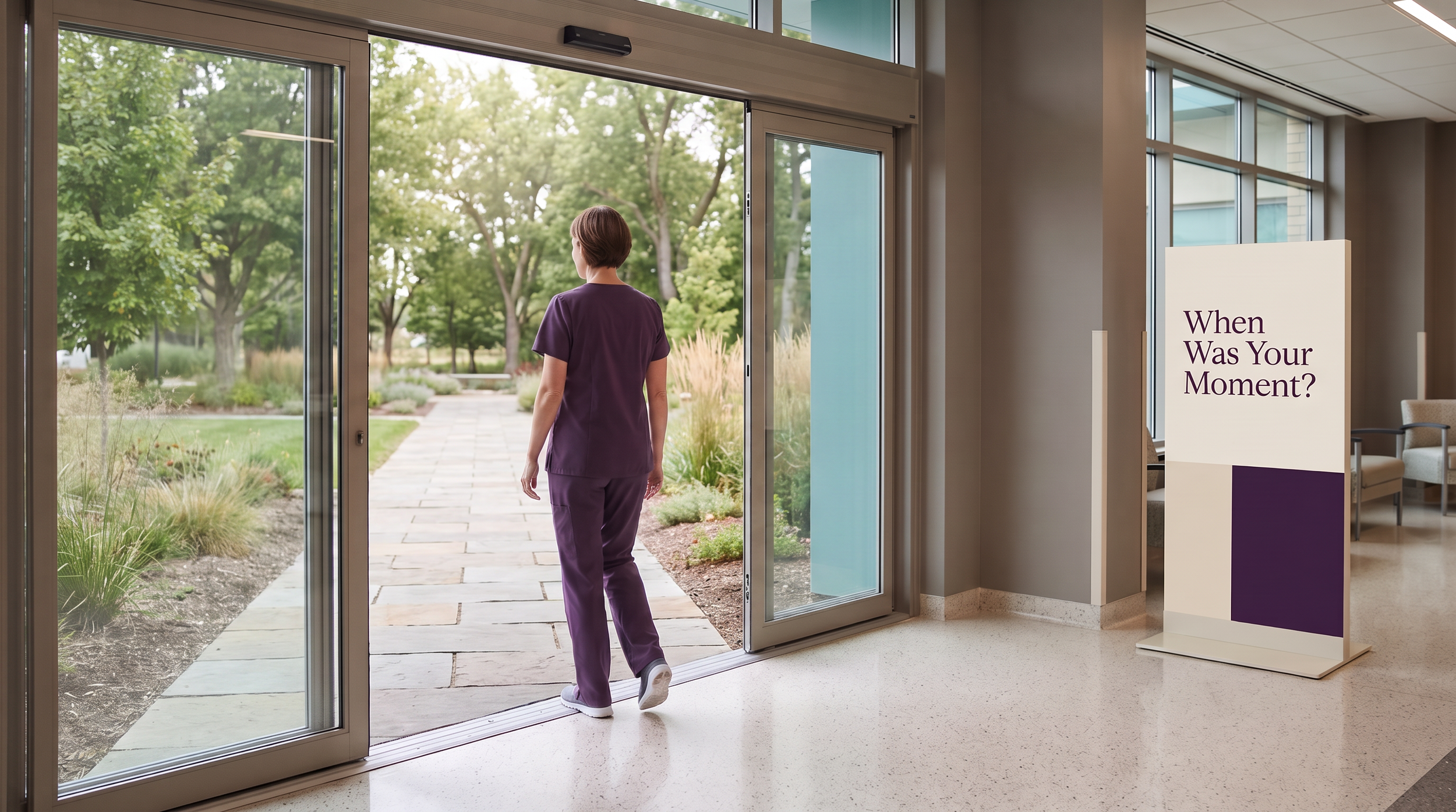
I noticed that relief as I walked across the threshold and out of the building. It did not erase the sadness. It told me that some part of me had been carrying even more than I had fully realized.
I felt the need for something to change for some time. I had a voice, though I was still learning how to name what mattered—and there was not enough room for it to be fully heard. Through my ongoing learning from Thomas Hübl’s work, I have come to understand that making room is not only an inner practice. It is also something we create together: enough space within ourselves to stay present, and enough space between us for what is true to be heard and responded to.
Hübl’s work invites attention to the ways personal experience, family and ancestral histories, and collective or institutional patterns may shape what becomes difficult to feel, say, hear, or address. When painful experience remains unacknowledged, it may contribute to disconnection, reactivity, silence, or repeated patterns in relationships and groups. I hold this as an invitation to humility and inquiry—not as a way to explain anyone else’s experience, assign trauma, or reduce complex workplace dynamics to one cause.
In that sense, “making room” means slowing down enough to notice what may be present in us and between us: the habits, assumptions, loyalties, fears, histories, and unfinished experiences that can narrow our capacity to listen. It also means pairing truth-telling with practical conditions—clear decision rights, sufficient time, responsive leadership, and meaningful follow-through—so that people are not asked simply to disclose more in systems that are not prepared to respond.
For a long time, I have felt drawn toward work that creates more room for listening, partnership, and meaningful change in healthcare. I have been building IntegratingDNA Learning Partners on and off for many years, alongside other professional commitments. I often told myself I would give it more attention when there was more time, more certainty, or a clearer sign that it was safe to do so.
But perhaps there is never a moment that feels entirely safe.
I stayed because I cared. I believed in the people, the purpose, and the possibility of contributing something useful. I also stayed because I was not yet ready to fully trust myself with the work I have long wanted to do. There is no shame in that. Care, responsibility, loyalty, and fear can all be present at the same time.
Still, I can see now that waiting too long to make a needed change can have a cost. When we do not make space for what is asking to be acknowledged, frustration can begin to speak for the truth we have not yet found words for.
I wish I had responded with more composure at times. Not because my feelings were wrong, and not because I believe people should be expected to remain untouched by difficult circumstances. I simply want to be honest about my part: I let frustration get ahead of the clearer, more grounded conversation I wish I had been able to have sooner.
That is a tender thing to admit.
I am also aware that I did not arrive at this threshold alone. I carry ancestry, family stories, professional formation, identities, and experiences of belonging and not belonging. These threads shape what safety, authority, loyalty, voice, and leaving can mean to me. They do not define anyone else’s story, but they remind me that people enter workplaces already in relationship with histories—personal, collective, cultural, and institutional—that deserve humility, care, and curiosity.
I am learning that accountability does not have to become self-punishment. I can reflect on what I would do differently while still treating myself with dignity. I can recognize that I was affected without deciding that being affected means I failed.
Professional endings are rarely just logistical. They can touch identity, relationships, confidence, belonging, and our sense of what we thought the future would hold. In healthcare and other caring professions, they can also carry the weight of work we poured ourselves into, people we hoped to support, and commitments we took seriously.
That is why humane transitions matter. Even when an organization faces a difficult decision, people deserve clarity, dignity, time, acknowledgment, choice where possible, and practical support. These are not extras. They are part of how we uphold trust and recognize the humanity of the people whose labor, judgment, and care have contributed to the work.
If you are standing at a threshold of your own, you do not have to rush to make an ending sound positive. Grief and relief can both be true. Caring about what is ending and recognizing that it may be time to move forward can both be true. You can wish you had done some things differently without making your worth conditional on having handled every moment perfectly.
As I look ahead, I feel a growing sense of blessings in the work of IntegratingDNA Learning Partners. What began as a thread I returned to, again and again, over many years is becoming a clearer commitment. I am grateful for the possibility of bringing this work forward with greater intention: creating space for nurses, leaders, and organizations to listen more deeply, recognize the conditions people may be carrying, and build practical pathways toward dignity, voice, partnership, and repair.
I do not take that possibility lightly. It feels both humbling and hopeful—a chance to offer what I have learned while continuing to learn alongside others.
I do not yet know every detail of what comes next. But I am choosing to meet this threshold with honesty, care, and a renewed willingness to make space for the work I have long felt called to do: supporting nurses, leaders, and healthcare organizations to create conditions where voice, dignity, learning, and meaningful partnership can take root.
For now, that is enough: to take the next honest step.